Friday, 30 November 2012

Food Reward Friday

This week's winner... the Starbuck's Double Chocolaty Chip Frappuccino!


Read more »

Sponsored by:
PopAds.net - The Best Popunder Adnetwork

Tuesday, 27 November 2012

$100 Nordstrom Gift Card Giveaway!

To celebrate YOU and thank YOU for reading, commenting, and following along on my new blog, I'm doing a GIVEAWAY!  This blog is a labor of love and I sincerely hope it is a place of encouragement for you.  As women, we can be especially critical of our appearance and bodies and I hope that we can try to change what we don't like, accept what we can't change, and just all love ourselves more, regardless of what we look like.

For the giveaway, I chose one of my favorite places to shop- Nordstrom!  One winner picked at random will win a $100 gift card to the store.


You must be a follower or subscriber to enter.  You can also be an Instagram follower (@Honeywerehome) or Pinterest follower 

Just leave a comment letting me know. (Please leave your email address so I can contact you if you win).  You can blog, facebook, tweet, pinterest . . . for additional entries. 

I'm so thankful for my readers!

The winner will be announced on Friday, December 14, 2012.  

U.S. and Canadian friends welcome to enter.   

* * * * *

Sponsored by:
PopAds.net - The Best Popunder Adnetwork

Monday, 26 November 2012

5 Reasons to Work Out During the Holidays

Hello and happy Monday!  I hope you had a great Thanksgiving and long relaxing weekend.  I had a nice Thanksgiving, but ended up eating way too much.  I went for a great walk/jog in our neighborhood park on Friday morning and it felt so good to get outside and get moving.  That jog made me realize how important it is to keep working out for the rest of the year.  With the Christmas holiday approaching and a schedule that is extra full, workouts can be the first thing to go.   But, I encourage you (and myself) to stick with (or start) exercising for these reasons:

1.  Reduce Your Stress.  For some of us, the holidays can be a stressful time of year and working out definitely helps to alleviate those tensions.   Even if I don't feel like going to the park or gym, by the time I'm finished, I feel so much better!  I have never regretted a workout, but I have regretted not working out.  Working out helps clear my mind and improve my mood a ton.

2.  Working Out Helps You Eat Healthier.  This is true for me, but I wonder if it's true for you too?? When I'm working out consistently, I tend to eat better.  I recognize that I worked hard at the gym and I don't want to "blow it" by eating poorly.  On the other hand, if I'm not working out, I tend to eat badly- indulging in way too many desserts.  It's a double whammy either way.

3.  Finish Strong.  For me, I've worked really hard to get into good shape and I want to maintain what I've accomplished.  If you've done the same, don't spoil it by quitting now!

4.  Be Ahead of the Game for the New Year.  When the New Year comes and everyone resolves to "get in shape" you'll be ahead of the curve!  How great will that feel?!

5.  No Guilt for Small Indulgences.  I try to eat healthy most of the time, but I admit to having a sweet tooth and indulging in desserts (and wine!).  I don't think total deprivation is a good thing and knowing I work out helps remind me that it's okay to indulge during the holidays without feeling guilty.

I don't tell you anything that I don't tell myself.  Writing this blog helps motivate me to continue my efforts at living healthy too.  My leg is feeling better, so I plan to pick back up my Live Fit Trainer.  I made my meals for the week on Sunday and I plan to Finish Strong and start the New Year off right!

via FitSugar

Also, I realized that I now have over 300 followers on Honey We're Healthy!  To celebrate and say Thank You, I will be announcing a GIVEAWAY this week.  If you want to follow this blog, click HERE or subscribe HERE.


Sponsored by:
PopAds.net - The Best Popunder Adnetwork

No fat gain while eating well during the Holiday Season: Palatability isolines, the 14-percent advantage, and nature’s special spice

Like most animals, our Paleolithic ancestors had to regularly undergo short periods of low calorie intake. If they were successful at procuring food, those ancestors alternated between periods of mild famine and feast. As a result, nature allowed them to survive and leave offspring. The periods of feast likely involved higher-than-average consumption of animal foods, with the opposite probably being true in periods of mild famine.

Almost anyone who adopted a low carbohydrate diet for a while will tell you that they find foods previously perceived as bland, such as carrots or walnuts, to taste very sweet – meaning, to taste very good. This is a special case of a more general phenomenon. If a nutrient is important for your body, and your body is deficient in it, those foods that contain the nutrient will taste very good.

This rule of thumb applies primarily to foods that contributed to selection pressures in our evolutionary past. Mostly these were foods available in our Paleolithic evolutionary past, although some populations may have developed divergent partial adaptations to more modern foods due to recent yet acute selection pressure. Because of the complexity of the dietary nutrient absorption process, involving many genes, I suspect that the vast majority of adaptations to modern foods are partial adaptations.

Modern engineered foods are designed to bypass reward mechanisms that match nutrient content with deficiency levels. That is not the case with more natural foods, which tend to taste good only to the extent that the nutrients that they carry are needed by our bodies.

Consequently palatability is not fixed for a particular natural food; it does not depend only on the nutrient content of the food. It also depends on the body’s deficiency with respect to the nutrient that the food contains. Below is what you would get if you were to plot a surface that best fit a set of data points relating palatability of a specific food item, nutrient content of that food, and the level of nutrient deficiency, for a group of people. I generated the data through a simple simulation, with added error to make the simulation more realistic.


Based on this best-fitting surface you could then generate a contour graph, shown below. The curves are “contour lines”, a.k.a. isolines. Each isoline refers to palatability values that are constant for a set of nutrient content and nutrient deficiency combinations. Next to the isolines are the corresponding palatability values, which vary from about 10 to 100. As you can see, palatability generally goes up as one moves toward to right-top corner of the graph, which is the area where nutrient content and nutrient deficiency are both high.


What happens when the body is in short-term nutrient deficiency with respect to a nutrient? One thing that happens is an increase in enzymatic activity, often referred to by the more technical term “phosphorylation”. Enzymes are typically proteins that cause an acute and targeted increase in specific metabolic processes. Many diseases are associated with dysfunctional enzyme activity. Short-term nutrient deficiency causes enzymatic activity associated with absorption and retention of the nutrient to go up significantly. In other words, your body holds on to its reserves of the nutrient, and becomes much more responsive to dietary intake of the nutrient.

The result is predictable, but many people seem to be unaware of it; most are actually surprised by it. If the nutrient in question is a macro-nutrient, it will be allocated in such a way that less of it will go into our calorie stores – namely adipocytes (body fat). This applies even to dietary fat itself, as fat is needed throughout the body for functions other than energy storage. I have heard from many people who, by alternating between short-term fasting and feasting, lost body fat while maintaining the same calorie intake as in a previous period when they were steadily gaining body fat without any fasting. Invariably they were very surprised by what happened.

In a diet of mostly natural foods, with minimal intake of industrialized foods, short-term calorie deficiency is usually associated with short-term deficiency of various nutrients. Short-term calorie deficiency, when followed by significant calorie surplus (i.e., eating little and then a lot), is associated with a phenomenon I blogged about before here – the “14-percent advantage” of eating little and then a lot (, ). Underfeeding and then overfeeding leads to a reduction in the caloric value of the meals during overfeeding; a reduction of about 14 percent of the overfed amount.

So, how can you go through the Holiday Season giving others the impression that you eat as much as you want, and do not gain any body fat (maybe even lose some)? Eat very little, or fast, in those days where there will be a feast (Thanksgiving dinner); and then eat to satisfaction during the feast, staying away from industrialized foods as much as possible. Everything will taste extremely delicious, as nature’s “special spice” is hunger. And you may even lose body fat in the process!

But there is a problem. Our bodies are not designed to associate eating very little, or not at all, with pleasure. Yet another thing that we can blame squarely on evolution! Success takes practice and determination, aided by the expectation of delayed gratification.

Sponsored by:
PopAds.net - The Best Popunder Adnetwork

Friday, 23 November 2012

Food Reward Friday

This week's winner: poutine!


While not as appetizing looking as the Monster Thickburger, poutine is probably more popular.  For those who aren't familiar, poutine is a large plate of French fries, topped with gravy and cheese curds.  It originated in Quebec, but has become popular throughout Canada and in the Northern US.

Read more »

Sponsored by:
PopAds.net - The Best Popunder Adnetwork

Wednesday, 21 November 2012

Bring on the Dessert!

When it comes to Thanksgiving, most of us look forward to eating some lovingly prepared home cooked food and indulging in a few (or more) drinks.  I'm no exception and especially love getting my kitchen all dirty and smelling delicious aromas from the oven.  This year, I'm not hosting Thanksgiving, so I'm just preparing a few desserts to take.  I like to indulge, but not to the point where I'm uncomfortably stuffed, so I usually nibble on the appetizers, eat a smaller main meal, and sample all of the desserts!

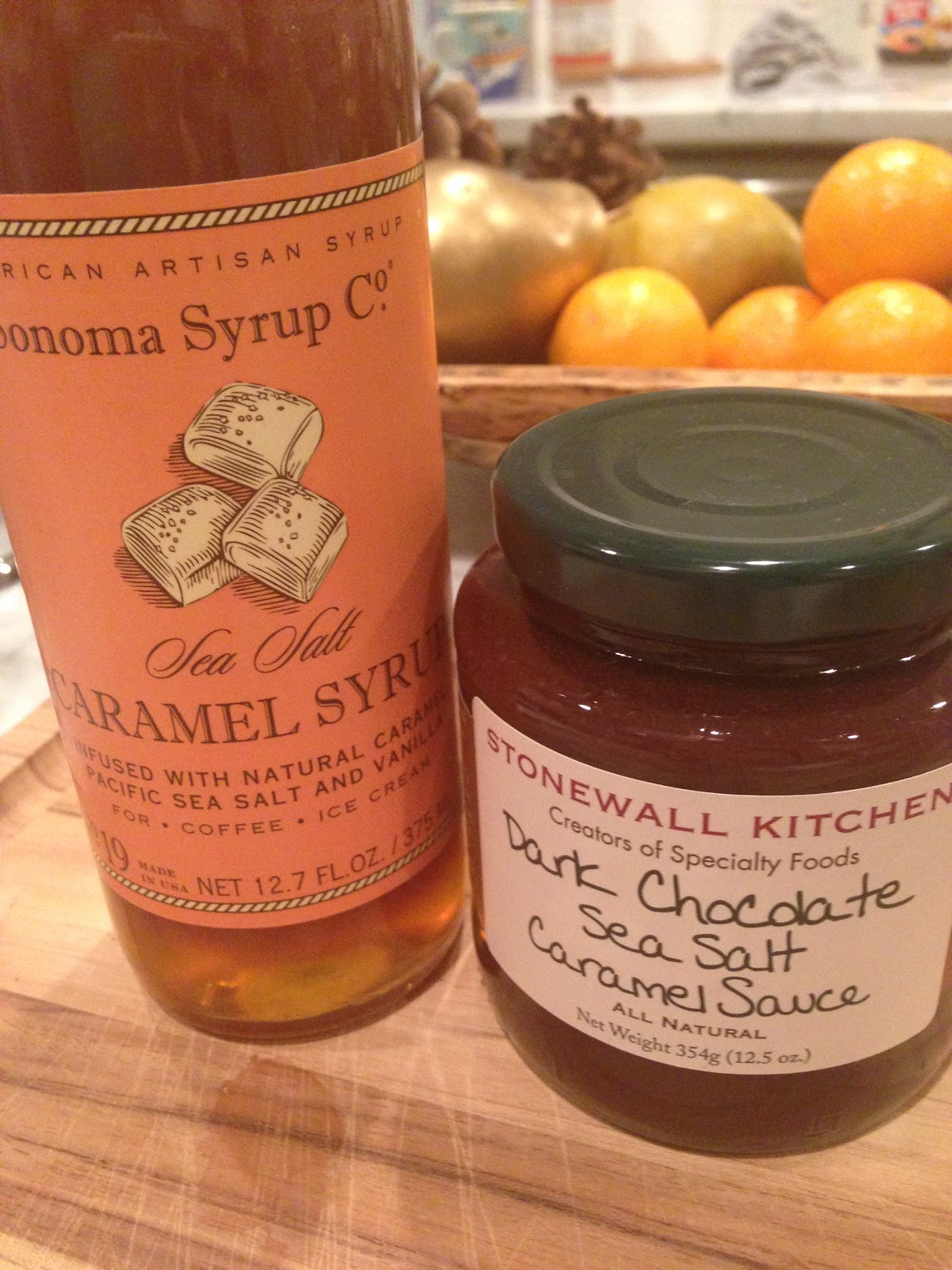
This year, I'm in charge of the chocolate.  I'm making

(I'm trying one of these sauces this time.)


Chocolate Peanut Butter Globs (from Ina Garten's new cookbook, Foolproof)


What's on your Thanksgiving menu?  I hope you have a wonderful day!

Sponsored by:
PopAds.net - The Best Popunder Adnetwork

Tuesday, 20 November 2012

Tex Mex To Go

Y'all know that I couldn't make it through the week without preparing and portioning out meals for the week.  This is especially true for my lunch since I typically eat at the office.  One of my "go-to" meals is a Tex Mex dish that I shared recently on Instagram.


A few people asked for the full recipe so here you go.  I feel kinda bad because this isn't really a "recipe" - it's more of an assembly.  This recipe makes 10 small meals for me. 

Ingredients
  • 2 packages Jennie O Extra Lean Ground Turkey
  • 1 large can of fat free refried beans
  • 2 packages Taco Bell low sodium seasoning
  • Low fat shredded cheese
  • Low fat or fat free sour cream
  • Pickled jalapeƱos 
Directions

Brown the meat, then add the seasoning packages and water according to package directions.

I portion out the meat into 10 small containers, add a scoop of beans, sour cream, cheese and a few jalapenos.  I microwave it for about a minute and a half.  I also like this as a salad on top of shredded lettuce.  


* * * * * 


Sponsored by:
PopAds.net - The Best Popunder Adnetwork