Friday, 12 December 2014

Friday, 5 December 2014

Food Reward Friday

This week's lucky "winner"... Pizza Hut Doritos Crunchy Crust Pizza!


Read more »

Sponsored by:
PopAds.net - The Best Popunder Adnetwork

Wednesday, 3 December 2014

Is Meat Unhealthy? Part IV

In this post, I'll address the question: does eating meat contribute to weight gain?

Non-industrial cultures

I'll get right to the point: humans living in a non-industrialized setting tend to be lean, regardless of how much meat they eat.  This applies equally to hunter-gatherers, herders, and farmers.

One of the leanest populations I've encountered in my reading is the 1960s Papua New Guinea highland farmers of Tukisenta.  They ate a nearly vegan diet composed almost exclusively of sweet potatoes, occasionally punctuated by feasts including large amounts of pork.  On average, they ate very little animal food.  Visiting researchers noted that the residents of Tukisenta were "muscular and mostly very lean", and did not gain fat with age (1, Western Diseases, Trowell and Burkitt, 1981).

!Kung man gathering mongongo fruit/nuts.
From The !Kung San, by Richard B. Lee.
Another remarkably lean hunter-gatherer population is the !Kung San foragers of the Kalahari desert.  The !Kung San are so lean that many of them would be considered underweight on the standard body mass index scale (BMI less than 18.5).  Average BMI doesn't exceed 20 in any age category (The !Kung San, Richard Lee, 1979).  Is this simply because they're starving?  It is true that they don't always get as much food as they'd like, but on most days, they have the ability to gather more food than they need.  The fact that they are able to reproduce normally suggests that they aren't starving.  Richard Lee's detailed work with the !Kung San indicates that approximately 40 percent of their calories came from animal foods during his study period in the 1960s.  This was mostly meat, with occasional eggs when available.

Read more »

Sponsored by:
PopAds.net - The Best Popunder Adnetwork

Monday, 1 December 2014

Recent Interviews

For those who don't follow my Twitter account (@whsource), here are links to my two most recent interviews.

Smash the Fat with Sam Feltham.  We discuss the eternally controversial question, "is a calorie a calorie"?  Like many other advocates of the low-carbohydrate diet, Feltham believes that the metabolic effects of food (particularly on insulin), rather than calorie intake per se, are the primary determinants of body fatness.  I explain the perspective that my field of research has provided on this question.  We also discussed why some lean people become diabetic.  Feltham was a gracious host.

Nourish, Balance, Thrive with Christopher Kelly.  Kelly is also an advocate of the low-carbohydrate diet for fat loss.  This interview covered a lot of ground, including the insulin-obesity hypothesis, regulation of body fatness by the leptin-brain axis, how food reward works to increase calorie intake, and the impact of the food environment on food intake.  I explain why I think proponents of the insulin-obesity hypothesis have mistaken association for causation, and what I believe the true relationship is between insulin biology and obesity.  Kelly was also a gracious host.  He provides a transcript if you'd rather read the interview in text form.

Sponsored by:
PopAds.net - The Best Popunder Adnetwork

Saturday, 29 November 2014

Black Bean and Sweet Potato Quesadillas


I have had a hard time coming up with savoury recipes that don't include hummus or chickpeas in some form (some people smoke, others abuse chickpea dips, what can I say) but then these utterly delicious and chickpea-free quesadillas came to me in a flash of inspiration. A Pinterest flash that is- always my runner-up source of vegspiration. (Instagram comes first!) They're filled with sweet, spicy, savoury amazingness and topped with a goddamn gorgeous green guacamole. Add the simplicity and I know that this will nick a place as one of my top ten lunch recipes.


Make these for yourself, double the recipe and share with a friend or multiply the ingredients by ten and serve it on the buffet table! You could even prepare these the day before (without grilling them of course) and have them for lunch the next day at work or school! They're best eaten warm so a microwave oven would be a plus but they could absolutely be served cold as well, no problemo.

Hope you enjoy this recipe just as much as I did!

Black Bean and Sweet Potato Quesadillas


Yields: 1 serving

- 1 gluten free brown rice tortilla (or tortilla of your choice, I use BFree wraps)

- 1 small sweet potato (approx. 100 g when peeled)

- 4 tbsp canned black beans, drained and rinsed

- 2 tbsp tomato salsa/sauce

- 1 tbsp vegan sour cream (optional)

- A handful baby spinach leaves

A pinch each of

- dried coriander

- cumin

- paprika powder 

- salt

Guacamole:

- 1/2 avocado

- 1/2 tbsp nutritional yeast

- 1 tsp lemon juice

- Salt and pepper to taste

- Dried chili flakes (optional)

How to:

1. Start by making your guacamole: Place all ingredients into a small bowl and blitz with a hand blender a few times. Intuitively, the longer you blend the smoother your guac will be so stop when you've reached the desired consistency. Set aside while you prepare the quesadillas.
2. Peel and slice the sweet potato thinly, then steam or boil the slices until they're soft enough to pierce with a fork. This will take approximately 5-10 minutes.
3. Mash the steamed sweet potato with a fork and spread it out evenly on half of the tortilla.
4. On the layer of sweet potato, divide the black beans evenly and sprinkle with cumin, coriander, salt and paprika powder.
5. Cover the other half of the tortilla with a layer of vegan sour cream mixed with tomato salsa and stick a handful of baby spinach leaves to it. 
6. Fold the tortilla in half and cut in 4 "pizza slices".
7. Grill in a grill pan (or a regular but then it won't be as beautifully charred) for a couple of minutes on each side, top with guacamole and serve!

Sponsored by:
PopAds.net - The Best Popunder Adnetwork

Monday, 24 November 2014

Is Meat Unhealthy? Part III

When we consider the health impacts of eating meat, cardiovascular disease is the first thing that comes to mind.  Popular diet advocates often hold diametrically opposed views on the role of meat in cardiovascular disease.  Even among researchers and public health officials, opinions vary.  In this post, I'll do my best to sort through the literature and determine what the weight of the evidence suggests.

Ancel Keys and the Seven Countries Study

Ancel Keys was one of the first researchers to contribute substantially to the study of the link between diet and cardiovascular disease.  Sadly, there is a lot of low-quality information circulating about Ancel Keys and his research (1).  The truth is that Keys was a pioneering researcher who conducted some of the most impressive nutritional science of his time.  The military "K ration" was designed by Keys, much of what we know about the physiology of starvation comes from his detailed studies during World War II, and he was the original Mediterranean Diet researcher.  Science marches on, and not all discoveries are buttressed by additional research, but Keys' work was among the best of his day and must be taken seriously.

One of Keys' earliest contributions to the study of diet and cardiovascular disease appeared in an obscure 1953 paper titled "Atherosclerosis: A Problem in Newer Public Health" (2).  This paper is worth reading if you get a chance (freely available online if you poke around a bit).  He presents a number of different arguments and supporting data, most of which are widely accepted today, but one graph in particular has remained controversial.  This graph shows the association between total fat intake and heart disease mortality in six countries.  Keys collected the data from publicly available databases on global health and diet:


Read more »

Sponsored by:
PopAds.net - The Best Popunder Adnetwork

Sunday, 23 November 2014

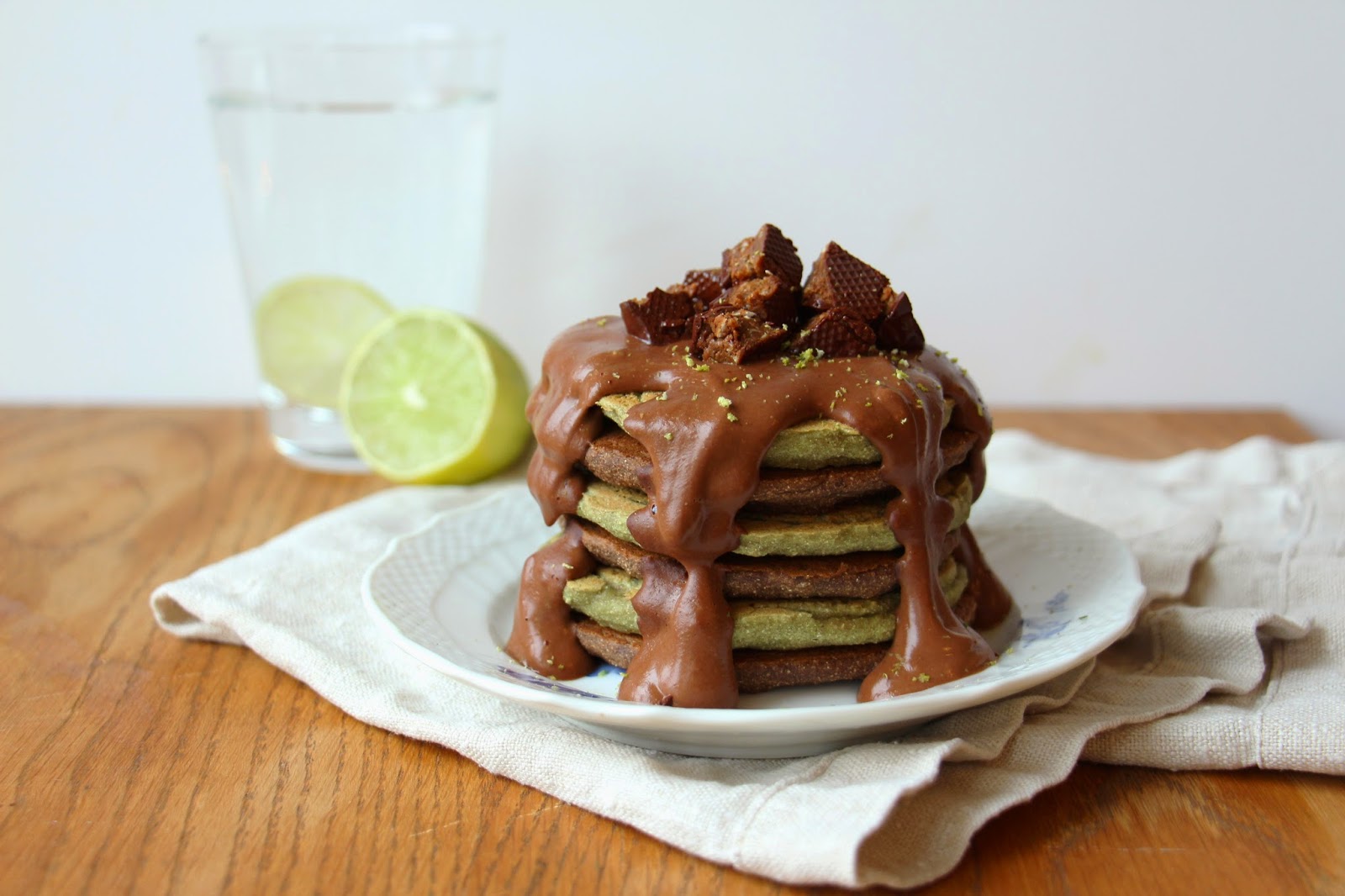
Carob & Zesty Lime Pancakes with a Chocolate Sauce

Carob & Zesty Lime Pancakes


5 tbsp buckwheat flour

2 tbsp coconut flour

1 tsp baking powder

5 tbsp almond milk

2 tbsp plant-based yoghurt (could sub for more almond milk)

1 chia egg (1 tbsp ground chia seeds mixed with 3 tbsp of water, left to swell for a couple of minutes)

For the lime pancakes:

1/2 tsp wheatgrass (could sub for chlorella/spirulina/matcha)

Zest of one lime

1 tsp freshly squeezed lime juice

1/2 tbsp liquid sweetener of your choice (preferably brown rice syrup as it won't spoil the green colour)

For the carob pancakes:

1/2 tbsp liquid sweetener of your choice (preferably date syrup, as it adds a lovely brown colour to the mix)

1-2 tsp carob powder

How to:
1. Place into a bowl the buckwheat flour, coconut flour and baking powder. Stir well to divide the baking powder evenly throughout the mix.
2. Add in the almond milk, chia egg and yoghurt and mix it all together with a fork.
3. Now, divide the batter into two and place half of it into another bowl.
4. To this bowl, add all of the ingredients for the lime pancakes and stir until smooth. You might have to adjust the amount of wheatgrass to get the green colour you want.
5. To the other bowl, add all of the ingredients for the carob pancakes and once again, stir until smooth.
6. Let the batters rest for a few minutes while preheating a non-stick pan or a regular frying pan with a spoonful of coconut oil to medium heat.
7. Fry spoonfuls of the batter for a few minutes on each side, stack and serve!

Chocolate sauce


2 tbsp peanut flour

1 1/2 tbsp almond milk

1/2 tbsp date  syrup

1 tsp cacao or cocoa powder

How to:
1. Stir all ingredients together in a bowl until smooth. Add more almond milk if needed.
2. Pour on top of your pancake stack and devour immediately!

Sponsored by:
PopAds.net - The Best Popunder Adnetwork